
Confirmed Flight Ticket but Denied Boarding — Why?
 By Sadia Jabeen · September 9, 2026 · 12 min read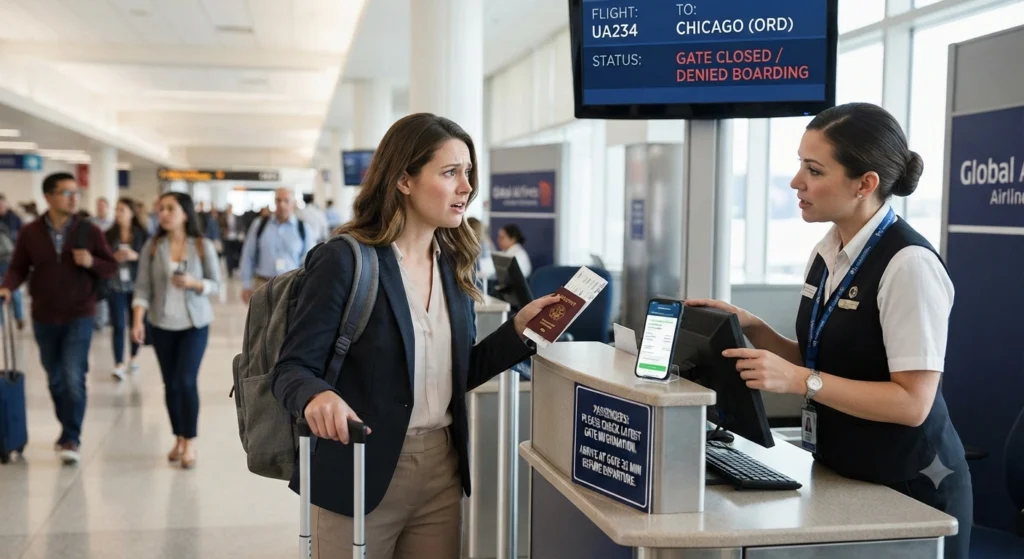
Imagine arriving at the airport with your passport, luggage, and a confirmed flight ticket, only to be told by airline staff that you can’t board the plane. For a passenger, this can be incredibly confusing. You may have paid for your ticket, received a booking confirmation, and even selected your seat, so you might naturally ask: How could the airline refuse to let me travel?
The important thing to understand is that having a confirmed flight ticket doesn’t always mean you have an unconditional right to board the plane. Several situations can cause an airline to deny you boarding, including overcrowding, problems with travel documents, late arrivals, security concerns, or operational changes. This guide explains what denied boarding means, why it happens, what problems it can cause, and what you should do if you find yourself in this situation.
What does “denied boarding” mean?

“
Denied boarding” means that an airline refuses to allow a passenger to board a flight even though the passenger was scheduled to travel. This can happen before you even get to the plane. For example, airline staff may stop you at the check-in counter due to a problem with your documentation. Alternatively, you may check in successfully but be turned away at the boarding gate. There are two broad categories of denied boarding.
Involuntary denied boarding occurs when the airline denies you boarding against your will; overbooking is a common example.
Voluntary denied boarding occurs when the airline asks passengers to give up their seats, usually because the flight is overbooked. Passengers who voluntarily report may receive benefits such as rebooking, meals, accommodation, or financial compensation depending on the airline and the route. This distinction matters because your rights can be different depending on why you were unable to board.
Find out how much the air ticket may cost
Why Can You Be Denied Boarding With a Confirmed Ticket?
There is no single reason why this happens. The airline normally has to consider several factors before allowing a passenger to travel.
1. The Flight is Overcrowded
Over crowdedness is one of the most common explanations. Airlines sometimes sell more seats than are physically available because they expect some passengers to not show up. Usually, some passengers miss their flights, so everyone who arrives can still travel. The problem occurs when more passengers arrive than expected. For example, if a plane has 200 seats, but 205 passengers are confirmed and all 205 arrive, five passengers cannot be physically accommodated. The airline may first ask for volunteers to take another flight. If not enough volunteers show up, some passengers may be involuntarily denied boarding. In this situation, the passenger may have done absolutely nothing wrong.
2. Your travel documents are not acceptable
A ticket does not replace the need for proper travel documents. For international travel, the airline may check your passport, visa, residence permit, transit visa, and other required documents. Therefore, you may have a confirmed flight ticket but still be denied boarding if, for example:
Your passport has expired.
Your passport does not have the required validity.
You do not have the required visa.
Your visa is for the wrong purpose.
You need a transit visa, but you do not have one.
Your residence permit has expired.
Your documents contain a significant discrepancy.
Airlines carry out these checks because transporting a passenger who does not meet the entry requirements to a destination can create serious complications for both the passenger and the carrier.
Find out how much the hotel room may cost
3. You arrived too late
Another common problem is missing the deadline for the director. Airline’s check-in or boarding deadline. Your ticket may show a departure time of 8:00 PM, but that does not mean you can arrive at the airport at 7:45 PM and expect to board. International flights often require passengers to complete check-in, baggage drop, security, immigration, and gate procedures before departure. If you arrive after the airline’s deadline, your booking can remain valid while the airline refuses to accept you for travel. This is generally very different from being denied boarding because of airline overbooking.
4. Your name or booking details are incorrect.
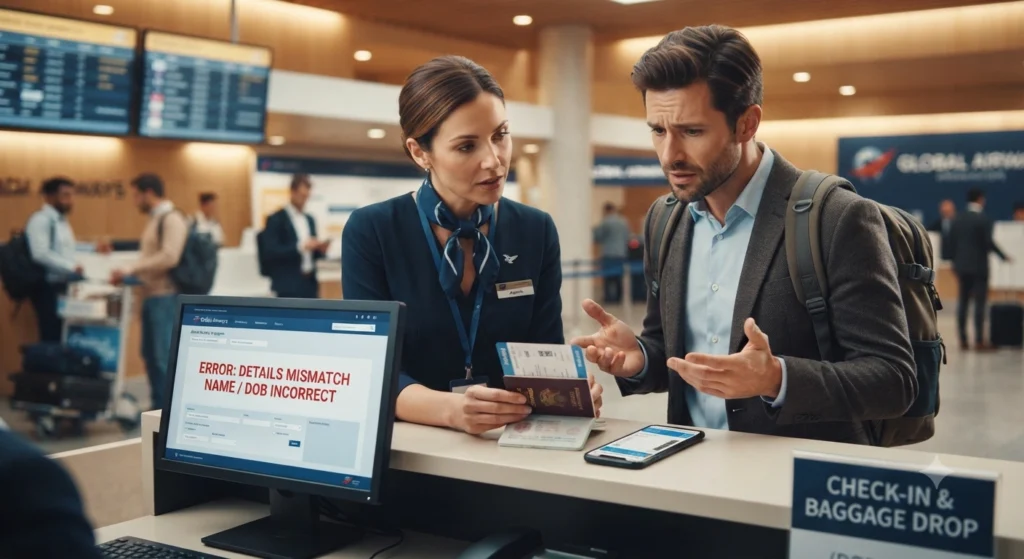
A significant discrepancy between your ticket and your passport can cause problems. For example, if the name on your reservation is significantly different from the name on your passport, airline staff may need to investigate the reservation before allowing you to travel. Some airlines allow corrections for minor spelling errors, while major changes may require a different procedure. Never assume that airport staff will automatically resolve the problem. If you notice an error before your trip, contact the airline or booking agency immediately.
Find out how much an eSIM may cost
5. The plane has been changed
Operational problems can also result in denied boarding. An airline may replace a scheduled plane with another plane that has fewer seats. For example, an airline may initially plan to operate a 300-seat plane, but later replace it with a 250-seat plane due to a technical or operational problem. If all passengers cannot be accommodated, some may need to be rebooked. Your original reservation may have been fully confirmed. The problem occurred because the airline’s operational circumstances changed.
6. Security or Safety Concerns
Airlines and airports have security procedures that passengers must follow. A passenger may be denied boarding due to a safety concern, prohibited behavior, failure to follow instructions, or another safety-related issue. In these circumstances, having a valid ticket does not necessarily override the security requirements of the airline or airport authorities. If this happens, ask the staff to explain what procedure applies rather than trying to force your way through the boarding process.
7. Problems with connecting flights
Connecting flights can create additional complications. Suppose you book from Islamabad to Istanbul on one ticket and from Istanbul to another country on a separate ticket. Even if both flights are confirmed, the airlines may treat them as separate journeys. Therefore, you may be asked for documents related to your onward journey. If you do not meet the transit requirements, the first airline may refuse to carry you. This is why passengers should check the transit rules before purchasing separate tickets.
Find out how much travel insurance may cost
What problems can denied boarding cause?
Being denied boarding can be more than just an inconvenience.
- Missing an Important Event: You could miss a wedding, business meeting, college admissions interview, cruise ship departure, or other important event.
- Additional Expenses: You may have to pay for transportation, meals, accommodations, or another ticket depending on the circumstances.
- Missing a Connecting Flight: If the denied flight was the first leg of your trip, you could miss your connection. This becomes especially complicated when your flights are booked separately because the second airline may not be responsible for your missed connection.
- Baggage Issues: If your baggage has already been checked, ask the airline what will happen to it. Don’t just leave the airport without confirming where and how you can pick up your baggage.
What should you do after being denied boarding?
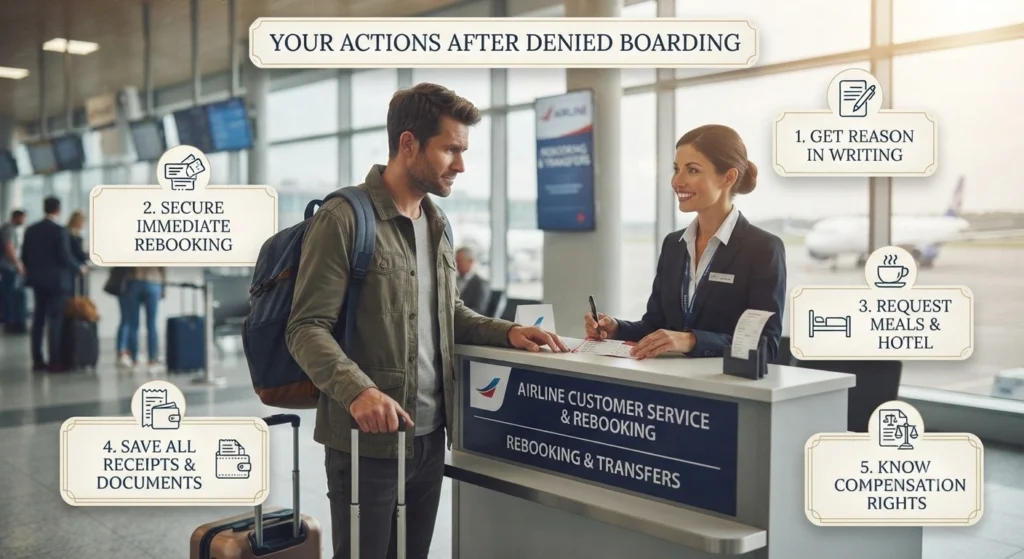
If the airline refuses to let you board despite having a confirmed flight ticket, your priority should be to find out exactly why.
Don’t immediately assume the airline has made a mistake.
Ask the airline representative:
“What is the exact reason why I am being denied boarding?”
Then ask if the decision is:
- Due to overcrowding
- Related to your travel documents
- Because you arrived late
- Due to a security issue
- Caused by an operational change
- Related to your ticket or reservation
- If possible, ask for the reason in writing.
This can be extremely helpful if you later need to make a complaint or seek compensation.
What if the flight is overcrowded?
If the reason is overbooking, ask the airline if they are seeking volunteers. If you want to travel later, ask the airline in detail what they are offering before agreeing.
Inquire about the following:
Details of the new flight
Compensation
Meals
Hotel accommodation
Transportation to and from the airport
Bag arrangements
Do not agree to give up your seat without understanding the terms.
If you are forcibly denied boarding, ask the airline about the passenger rights rules that apply to your flight.
Can You Get Compensation?
Possibly, but it depends on the circumstances. Having a confirmed ticket does not automatically entitle you to compensation if you are denied boarding. Your rights may depend on factors such as the reason you were denied boarding, your on-time arrival, the validity of your documents, the airline involved, the country or region where relevant passenger rights laws apply, and whether the refusal was voluntary or involuntary.
For example, about a passenger denied boarding due to insufficient travel documents is very different from that of a passenger who arrived on time with valid documents but was denied boarding because the airline overbooked. Therefore, determine the reason first before deciding whether you are entitled to compensation.
How can you avoid being denied boarding?
You can’t eliminate the risk entirely, especially when the problem stems from the airline overbooking or an unexpected flight change. However, you can minimize the risk of avoidable problems. Before you travel, make sure you have:
Passport validity
Visa
Transit visa requirements
Passenger name
Booking number (PNR)
Ticket number
Flight date
Departure airport
Departure terminal
Check-in deadline
For international travel, check entry and transit requirements well in advance of your departure time. Arrive early to complete all airport procedures without rushing. Furthermore, keep your booking confirmation, payment receipt, passport, visa, and all important airline communications on your phone, and back them up if possible.
Final Takeaway
A confirmed flight ticket means your booking has been accepted and your ticket issued, but you may still be denied boarding in some cases. The most common reasons include overbooking, invalid or incomplete travel documents, late arrival, booking errors, aircraft changes, security concerns, or complications with separate connecting tickets. If you are denied boarding, don’t leave the airport disappointed. Inquire about the specific reason, request written confirmation if possible, and identify any alternative arrangements or applicable passenger rights. Understanding the reason behind the decision is key to knowing what to do next and whether the airline owes you assistance, a rebooking, or compensation.
Follow Nanajee (Grandpa) Travels for cheap airline tickets, great hotel rooms and best deals on car rentals.
See world, save money, use Nanajee Travels
Other travel related blogs:
Flights & Airfare
- Cheap Flights – Save money on airfare
- How to Find Cheap Flights: 10 Proven Tips That Actually Work
- Best Time to Book Flights for Cheap Deals
- Cheap Flight Tickets from Toronto to New York City: Your Guide with Nanajee Travels
- Cheap Return Flights from Dubai to Islamabad Pakistan– June & July 2025 Deals
- Cheap Airline Tickets to Spain: Best Budget Flights
- Discover the Latest Flight Deals to Europe:Your Guide to Affordable Travel
- Best Flights to the Middle East
- Is It Cheaper to Take a Red-Eye Flight?
- Difference Between Direct, Nonstop and Connecting Flights
- How to Catch Connecting Flights in Singapore
Airlines & Airline Deals
- Aegean Airlines Flights: Explore Greece in Style
- Air Canada: Latest Flight Deals for Round-Trips
- Cathay Pacific’s Latest Deals: Your Ticket to Affordable Luxury Travel
- JetBlue Deals: Save Up to $750 on Flights and Hotels
- Flight perfection: reveling the world’s top airlines
- Lesser-Known Airlines for Budget Travel
- New Cities You Can Visit With Emirates in 2024
Student Flights & Discounts
- Air Canada Student Pass 2025: Your Ticket to Easy Travel
- Latest Flight Deals for Students: 2025 Edition
- Student Flight Discounts: Never Pay Full Price Again
Airline Loyalty & Frequent Flyer Programs
- Airlines Loyalty Programs – What, why and how
- Best Airline Loyalty Programs for Free Flights in 2025
- Complete Guide to the Etihad Airways Loyalty Program
- Qatar Airways Privilege Club Guide
- Qantas Status Credit Cost A Comprehensive Guide
- Qatar vs Qantas Airlines: Latest Loyalty Program Updates
Business & First Class
- A comprehensive guide to business class flights
- Business Class vs. First Class on International Flights: Which One is Worth It?
- Delta Business Class vs First Class on International Flights: What’s the Difference?
- Hong Kong Airlines A330 Business Class Review Worth Or Not
- Singapore Airlines Business Class 777 Premium Experience
- Airport Lounge Access Without Business Class
Hotels & Accommodation
- Hotel rooms – Find best deals
- Cheap Hotels in London: Your Guide to Budget-Friendly Stays
- Affordable Accommodations in Manchester: Top Budget Hotels for Your Next Stay
- Budget Friendly Hotels in Paris for Family
- Best Family Hotels Mexico Riviera Maya
- Discovering the Top 8 Luxury Hotels in London
- Discover Edinburgh’s Best Luxury Hotels
- Discover the Best Hotels in Las Vegas You’ve Never Heard Of
- Italy’s Top 6 Hotels and Their Nearby Attractions
- Luxurious Escapes: The Top Five Hotels in Singapore
Hotel Deals, Rewards & Upgrades
- Last minute Hotel deals – tips and tricks
- Last-Minute Hotel Deals in Birmingham, AL – Your Ultimate Guide to Saving Big with Nanajee.com
- Last-minute hotel deals for a new year’s eve
- Best hotel rewards programs in the world
- Luxury Unleashed: The 6 Best Hotel Loyalty Program
- How to Redeem Hotel Points for Free Stays: A Complete Guide
- How to Get a Free Hotel Room Upgrade: The Simple Truth
- When Your Hotel Booking Failed but Money Was Deducted
Car Rentals
- Benefits & Tips – Car Rentals
- Budget-Friendly Car Rental Hacks: How to Save Money
- How to Use Promo Codes for Last-Minute Car Rentals
- Summer 2025 Car Rental Deals in Germany – Compare Prices at Nanajee.com
- Cross-Border Car Rentals: Rules, Insurance, and Travel Tips
Visas & Immigration
- A Comprehensive Guide to Popular Tourist Visas
- Spain Visa Guide for Pakistani Citizens (2026)
- How to Visit Thailand Cheaply from Pakistan in 2025: A Complete Guide
Travel Guides & Destinations
- Best Places to Visit Spain in 2024
- Top 5 Adventure Spots in South America 2025
- 11 Best Places to See in Mangystau, Kazakhstan
- Top 7 Budget Destinations in China
- Top European Travel Destinations for First Time Travellers
- Lisbon Travel Guide: Discover Portugal’s Most Charming City
- Hong Kong: Skyscrapers, Culture & Disney Magic
- 14 must see places in Tokyo JAPAN
- Paris – The city of Love & Life
- Seoul Korea
- Las Vegas – The Sin City
- Los Angeles – The city of Angles
- Heritage Horizons: Timeless Treasures Explored
- Discover Tranquility: 10 Renewal Destinations for 2024
- Dreamy Destinations: 5 European Long Stays
- Last Minute City Breaks in 2024: An Ultimate Guide
- Christmas in the Maldives: Top 10 Places to Visit
- Christmas in Prague 2025: A Fairytale Winter Wonderland
- Fall Road Trips from Chicago You’ll Love
- Discover the Best Eid al-Fitr Staycation Deals in the GCC
Airport, Baggage & Travel Tips
- Navigating international airports: Tips for travel migrants
- Lost Baggage at the Airport? 7 Steps to Take Immediately
- Pakistan to Thailand Flight: 7 Common Transit Mistakes
- Airport Lounge Access Without Business Class
Travel Insurance
eSIM & Travel Services
- Introducing Saily eSIM: Affordable Data for Your Next Trip
- Nanajee Travel Services Complete User Guide