How to rent a car in Spain and France
 By Sadia Jabeen · May 20, 2026 · 10 min read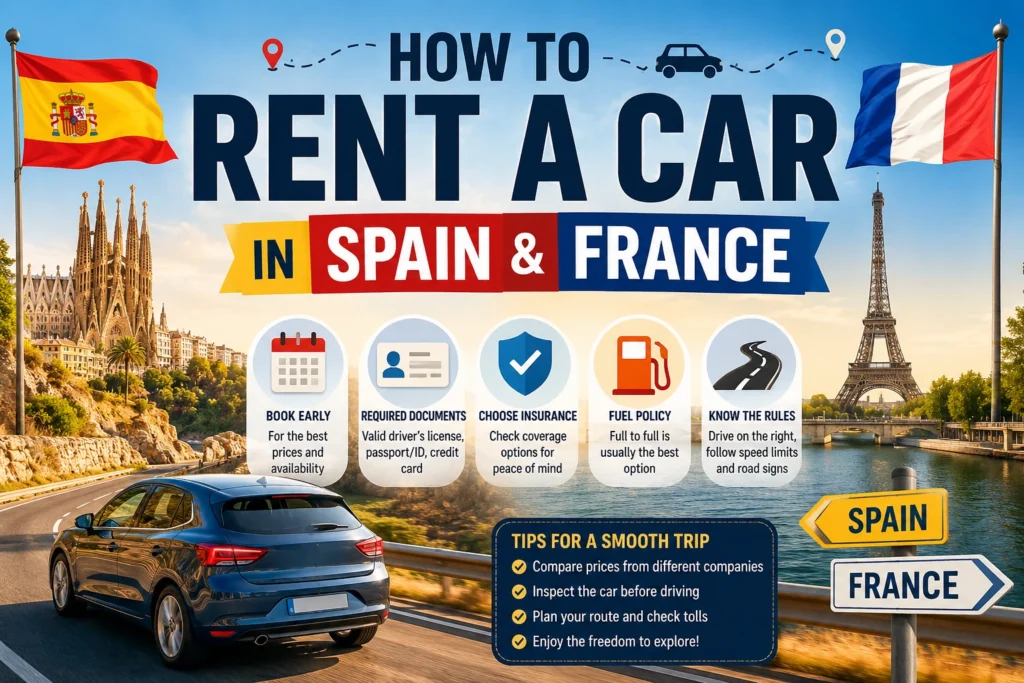
Renting a car in Europe is one of the most practical ways to travel freely, especially if you plan to explore several cities and rural areas. Spain and France are two countries where road travel makes a big difference in your overall experience. Public transportation works well in cities, but if you want flexibility, comfort, and access to hidden places, renting a car becomes almost essential. The process is not complicated, but many travelers face problems because they don’t understand the rules, fees, or booking systems properly. This guide explains everything in a clear and realistic way so you can confidently rent a car in Spain and France without stress or confusion.
For travelers who enjoy discovering vibrant international cities before exploring Europe, the Hong Kong Travel Guide: Skyscrapers, Culture & Disney Magic offers another exciting travel experience filled with modern skylines and cultural charm.
Find out how much the air ticket may cost
Understanding Why Car Rental is So Popular in Spain and France
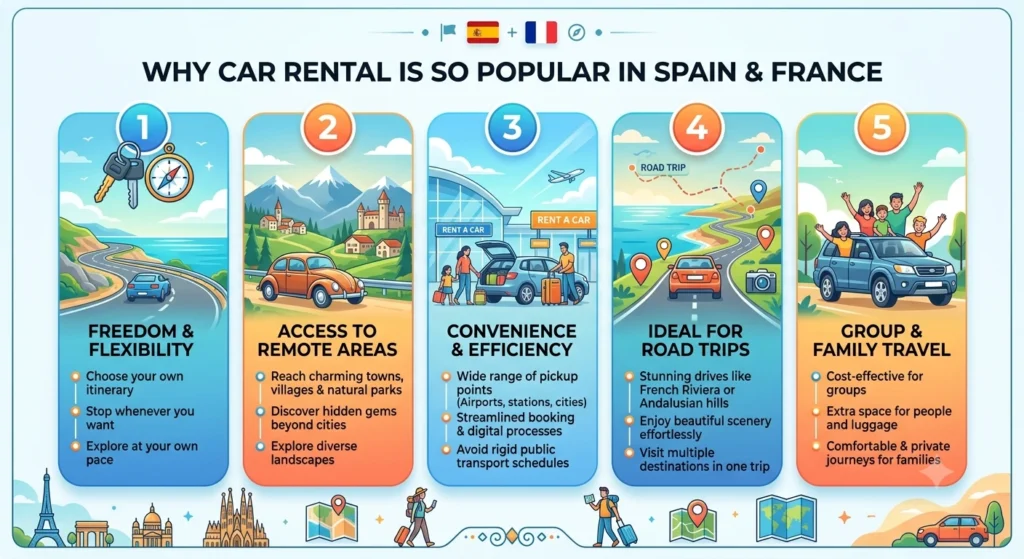
Spain and France are two large countries with diverse landscapes. Cities like Madrid, Barcelona, Paris, and Lyon are well connected by trains, but many beautiful places are not easily accessible without a car. Coastal villages, mountainous areas, vineyards, and rural towns often require private transportation.
That’s why many tourists prefer to rent a car in Spain and France rather than rely solely on public transportation. It gives you full control over your path. You are not dependent on train schedules or bus schedules. You can stop in small towns, eat local food, take pictures, and explore at your pace. For example, in Spain, driving through Andalusia or Costa Brava gives an entirely different experience compared to staying only in cities. In France, regions like Provence, Alsace, and the Loire Valley are best enjoyed by road.
If relaxing destinations and luxury stays interest you, you can also explore the Top 10 Best Resorts in Mexico for more travel inspiration beyond Europe.
Find out how much the hotel room may cost
What You Need Before Renting a Car
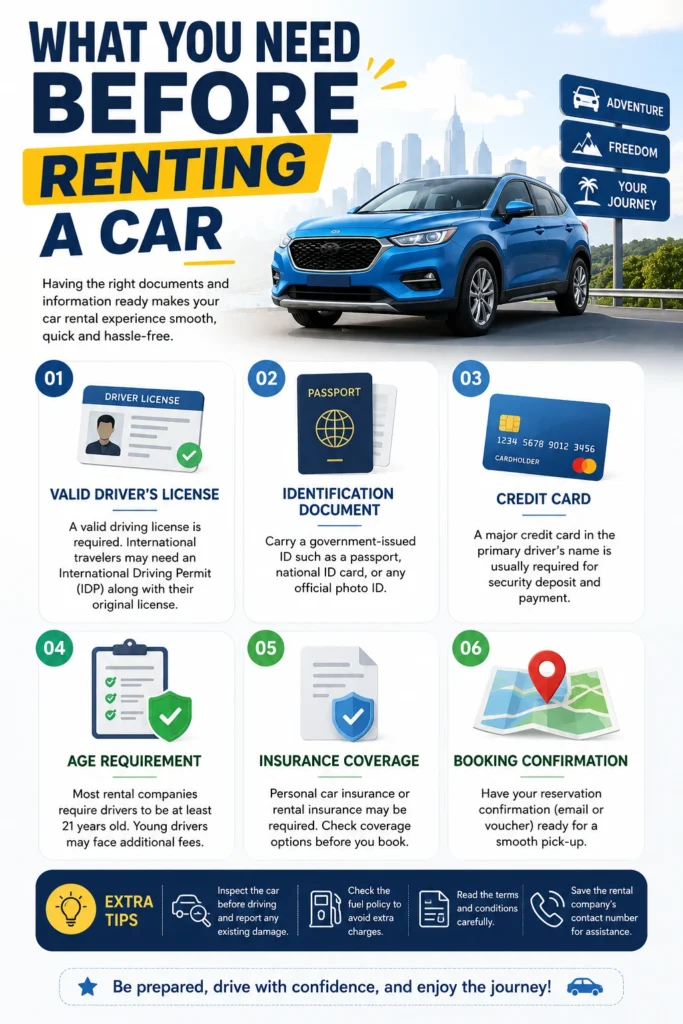
Before you can rent a car in Spain and France, you must meet some basic requirements. These types are common in most rental companies in Europe.
·
First, you need a valid driver’s license. If your license is in English or uses the Roman alphabet, it is usually accepted. If not, you may need an International Driver’s Permit (IDP) to support your native license.
·
Second, you must carry a passport or national ID card for identity verification. This is required upon receipt.
·
Third, most businesses require a credit card to secure the deposit. The deposit is temporarily blocked and waived after the vehicle is returned. Some companies accept debit cards, but the terms may vary.
·
Finally, there is an age requirement. Typically, drivers must be at least 21 years old. However, drivers under the age of 25 often pay an additional fee to young drivers.
Find out how much car rental may cost
How the Booking Process Works in Europe
Booking a rental car in Spain and France is simple, but choosing the right one is important. Most travelers book online before arriving in Europe. The process is usually cheaper and more convenient.
·
You start by comparing rental companies on online platforms. These sites display different prices, car types, insurance options, and policies in one place. This helps you choose the best deal based on your budget.
·
After the comparison, you choose the pickup location. Airports are the most popular choice because they offer more and more flexible times. Cities also have offices for rent, but picking up flights from airports is often easier for international travelers.
·
Next, you choose your car class. Economy cars are the least expensive and suitable for traveling in the city. If you’re traveling with the family or planning long road trips, SUVs or large vehicles offer greater comfort and luggage space.
·
Once everything is selected, you confirm your booking and receive a voucher. This document is important when you pick up your car.
·
When renting a car in Spain and France, it’s always advisable to book early because prices go up with travel dates, especially in the summer.
Nature lovers and summer travelers can also check out The 8 Best Places to Visit in Germany This Summer for scenic European getaway ideas.
Find out how much travel insurance may cost
Car Rental Costs and What Affects Pricing

The cost of renting a car in Spain and France depends on several factors. The season plays a major role. The summer months and holiday periods are more expensive due to high demand. The winter months are usually cheaper. The type of vehicle also affects pricing. Small economy cars are the cheapest option, while luxury cars and SUVs cost more. Cars with manual transmission are usually cheaper than automatic cars in Europe.
Insurance is another important factor. Basic insurance is usually included, but full coverage increases the overall price. Many travelers upgrade their insurance for peace of mind, especially when driving in unfamiliar areas.
On average, prices range from €25 per day for basic cars to more than €100 per day for luxury cars. If you plan to rent a car in Spain and France, comparing prices in advance can save a significant amount of money.
Find out how much an eSIM may cost
Insurance, deposits, and hidden costs
·
One of the most confusing aspects of car rental is insurance. Most companies include basic coverage, but they often come with a high overpayment. This means that you are still responsible for a portion of the costs of damages.
·
That’s why rental companies offer additional insurance packages. These resources reduce or eliminate your financial liability in the event of accidents or damages. However, these extras increase your daily cost.
·
When renting a car in Spain and France, always check what is covered by your insurance policy. Look for a Collision Damage Waiver (CDW), theft protection, and liability coverage.
Deposits are also important. The rental company will hold a certain amount on your credit card as collateral. This can range from €200 to €1500 depending on the type of vehicle. The amount is released after the car is returned in good condition. Be wary of hidden charges such as airport fees, driver surcharges, late return fines, and fuel service charges. Always read the final price breakdown before confirming your booking.
Driving Rules to Follow
The driving rules in Spain and France are strict yet easy to adhere to. Drive on the right side of the road in both countries. Seat belts are mandatory for all passengers. The use of a mobile phone while driving is strictly prohibited unless you use a hands-free system. Speed limits vary depending on the type of road.
In cities, speed limits are usually around 50 km/h. On highways, Spain allows up to 120 km/h, while France allows up to 130 km/h in good weather conditions.
Toll roads are common in France and some parts of Spain. These funds are well cared for but require a payment to be made. You can pay by cash or payment card at the toll booths. When renting a car in Spain and France, understanding these rules helps you avoid fines and ensures a smooth driving experience.
Fuel Policies and Return Conditions
Most car rental companies use a “full to full” fuel policy. This means that you receive the car with a full tank, and you have to return it full. If you fail to do so, the company will charge you a higher fuel-filling fee. It’s always best to keep fuel receipts as proof. Furthermore, check the type of fuel before filling the tank because using the wrong fuel can cause costly damage. Returning the car on time is also important. Late returns often result in additional charges, sometimes even for an extra day.
Ultimate Travel Tips for First-Time Renters
If this is your first time planning to rent a car in Spain and France, preparation is key. Always compare companies, read the terms carefully, and avoid unnecessary extras at the rental office.
Take photos of the car before you set off. This protects you from unfair damage claims. Plan your routes in advance, especially if you’re crossing the border between Spain and France, as some companies require prior authorization.
Driving through these two countries can be one of the most memorable moments of your trip. With proper planning, renting a car gives you freedom, comfort, and access to places that most tourists don’t see. Finally, choose to rent a car in Spivek.
Follow Nanajee (Grandpa) Travels for cheap airline tickets, great hotel rooms and best deals on car rentals.
See world, save money, use Nanajee Travels
Other travel related blogs:
A
- Airlines Loyalty Programs – What, why and how
- Aegean Airlines Flights: Explore Greece in Style
- Air Canada Student Pass 2025: Your Ticket to Easy Travel
- Air Canada: Latest Flight Deals for Round-Trips
- A Comprehensive Guide to Popular Tourist Visas
- A comprehensive guide to business class flights
- Affordable Accommodations in Manchester: Top Budget Hotels for Your Next Stay
- Top 5 Adventure Spots in South America 2025
B
- Benefits & Tips – Car Rentals
- Best Airline Loyalty Programs for Free Flights in 2025
- Best hotel rewards programs in the world
- Best Places to Visit Spain in 2024
- Best Practices for Booking Group Travel
- Best Time to Book Flights for Cheap Deals
- Budget-Friendly Car Rental Hacks: How to Save Money
- Business Class vs. First Class on International Flights: Which One is Worth It?
- 9 Best Places for a Memorable Iftar Buffet in Dubai (2025)
- Best Family Hotels Mexico Riviera Maya
- 11 Best Places to See in Mangystau, Kazakhstan
- Budget Friendly Hotels in Paris for Family
C
- Cheap Flight Tickets from Toronto to New York City: Your Guide with Nanajee Travels
- Cheap Return Flights from Dubai to Islamabad Pakistan– June & July 2025 Deals
- Cheap Flights – Save money on airfare
- Cheap Hotels in London: Your Guide to Budget-Friendly Stays
- Christmas in the Maldives: Top 10 Places to Visit
- Christmas in Prague 2025: A Fairytale Winter Wonderland
- Cathay Pacific’s Latest Deals: Your Ticket to Affordable Luxury Travel
- Complete Guide to the Etihad Airways Loyalty Program
- Cheap Airline Tickets to Spain: Best Budget Flights
D
- Discover Tranquility: 10 Renewal Destinations for 2024
- Dreamy Destinations: 5 European Long Stays
- Discovering the Top 8 Luxury Hotels in London
- Discover the Best Eid al-Fitr Staycation Deals in the GCC
- Discover Edinburgh’s Best Luxury Hotels
- Discover the Latest Flight Deals to Europe:Your Guide to Affordable Travel
- Delta Business Class vs First Class on International Flights: What’s the Difference?
- Discover the Best Hotels in Las Vegas You’ve Never Heard Of
E
- Top 7 Emerging Travel Destinations in 2025 You Can Book Under $500
- Essential Tips to Plan Your First Trip to Dubai
- eSIM – An essential tool in traveling
- Exploring the Enchanting Beauty of Switzerland: Top Tourist Places
- Exploring Germany: Top 11 Must-Visit Destinations
- Emirates 777 Business Class Review 2024
- Earn 3,000 Bonus Miles with Frontier Airlines This January
- Earn 1,500 Bonus Hilton Honors Points on All Stays Worldwide
- Emirates Student Discounts – Fly Better, Fly Emirates
- Emirates Skywards Loyalty Program: Unlock the Best Travel Rewards
F
- Flight perfection: reveling the world’s top airlines
- Flight Insurance for Travel Migrants: Do You Need It?
- Fall Road Trips from Chicago You’ll Love
H
- How to Visit Thailand Cheaply from Pakistan in 2025: A Complete Guide
- Hotel rooms – Find best deals
- Hong Kong Airlines A330 Business Class Review Worth Or Not
- Heritage Horizons: Timeless Treasures Explored
- How to Redeem Hotel Points for Free Stays: A Complete Guide
- Hong Kong: Skyscrapers, Culture & Disney Magic
- How to Use Promo Codes for Last-Minute Car Rentals
- How to Find Cheap Flights: 10 Proven Tips That Actually Work
I
- Italy’s Top 6 Hotels and Their Nearby Attractions
- Introducing Saily eSIM: Affordable Data for Your Next Trip
- Is It Cheaper to Take a Red-Eye Flight?
J
L
- Las Vegas – The Sin City
- Last minute Hotel deals – tips and tricks
- Last-Minute Hotel Deals in Birmingham, AL – Your Ultimate Guide to Saving Big with Nanajee.com
- Los Angeles – The city of Angles
- Last-minute hotel deals for a new year’s eve
- Luxury Unleashed: The 6 Best Hotel Loyalty Program
- Lesser-Known Airlines for Budget Travel
- Luxurious Escapes: The Top Five Hotels in Singapore
- Last Minute City Breaks in 2024: An Ultimate Guide
- Latest Flight Deals for Students: 2025 Edition
- Lisbon Travel Guide: Discover Portugal’s Most Charming City
M
N
- Navigating international airports: Tips for travel migrants
- New Cities You Can Visit With Emirates in 2024
- New Travel Insurance Card: A Complete Guide
P
Q
- Qantas Status Credit Cost A Comprehensive Guide
- Qatar vs Qantas Airlines: Latest Loyalty Program Updates